Bespoke React websites and web apps for businesses across Essex and London. Designed and built by our Chelmsford studio.
React web development
For projects that need more than a theme.
React is a JavaScript library for building interfaces out of reusable components. We use it, with the TanStack Start framework, for websites and web apps that need bespoke interaction, live data or features a theme was never going to give without a fight.
Our own website is built this way, and so is the new Balch Estate Agents website. We work with businesses across Essex and London from our Chelmsford studio, where design and development happen side by side, so the journeys we plan are the journeys we build.
Server-side rendering
Readable first, interactive a moment later.
01Request
A visitor, or a search engine, asks for a page.
02Server render
React renders the page on the server, with its content and links in place.
03HTML arrives
The browser shows the complete page straight away. Nothing waits for JavaScript to read it.
04React takes over
React attaches to the page in the browser, so menus, filters and forms respond.
Schematic of how a server-rendered React page reaches a visitor. Stages are illustrative, not timings.
Why React
What React gives a bespoke build.
The benefits are practical ones. They show up in how the site is built, how it behaves and how easily it can grow.
<Page />
<Header />
<Menu />
<Search />
<Results />
<Card />
<Saved />
<Card />
<Footer />
Schematic. One card component, built once and used in two places. Labels are illustrative.
01
Bespoke components
Every part of the interface is a component designed for your site. Once it exists it can be reused wherever the same pattern appears, so pages stay consistent as the site grows.
02
Rendered on the server
Pages are rendered on the server, so the HTML that reaches a browser or a search engine already contains the words, headings and links. React then takes over in the browser for the interactive parts.
03
Interaction without reloads
Filters, searches, shortlists and multi-step forms update in place, so visitors keep their place while they explore.
04
Live data from your systems
Server-side code can connect to the API or feed behind your business, so content such as property listings comes from the system your team already uses.
05
Accessibility, built once
Build an accessible menu, dialog or carousel once and every page that uses it inherits the same keyboard and screen reader behaviour.
06
Room to grow
New features arrive as new components, rather than as workarounds for the assumptions of a theme or page builder.
Bespoke React web apps
The kind of work React is made for.
React earns its place when a website has a job to do beyond presenting pages. These are the projects where we are most likely to recommend it.
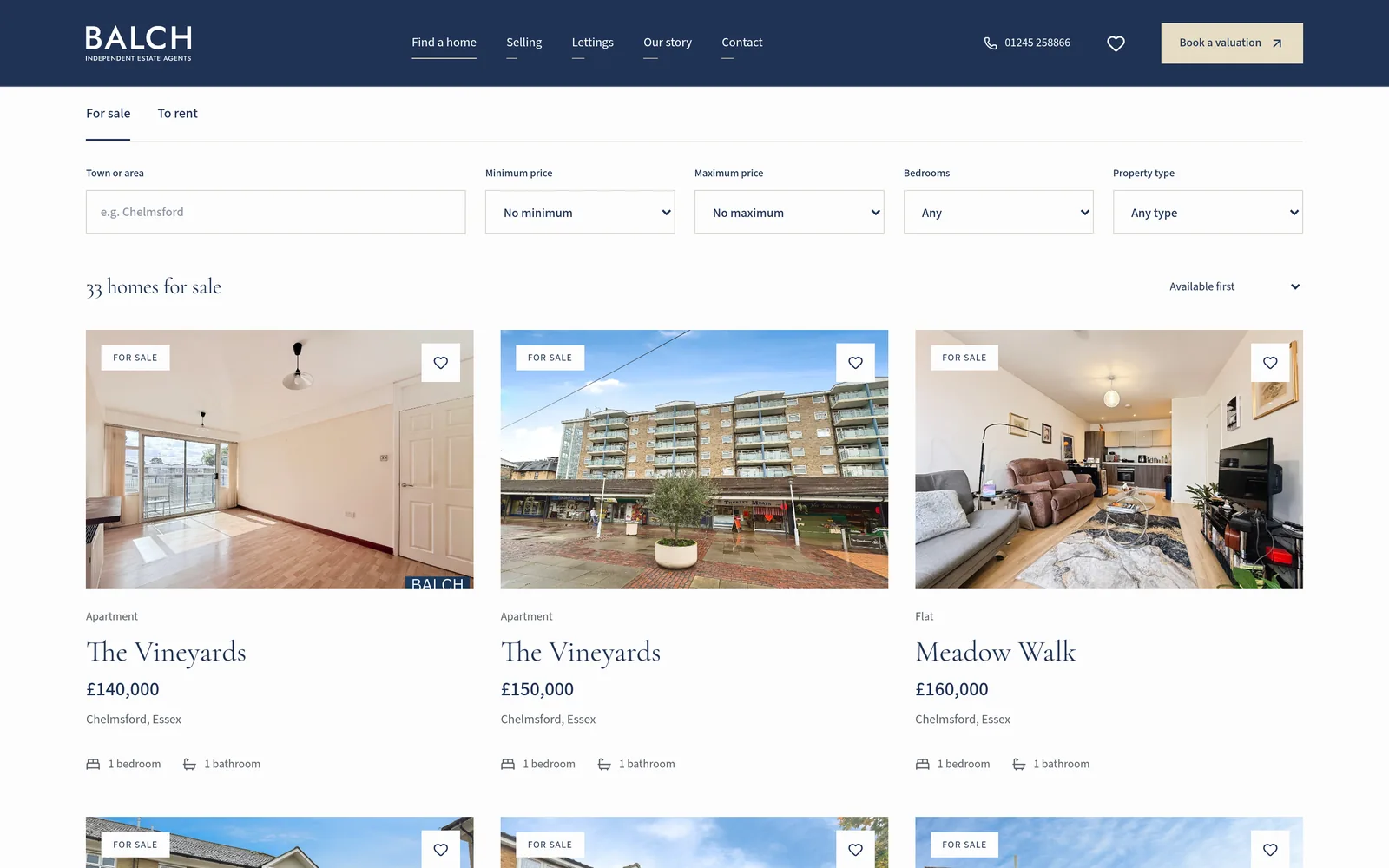
Property search on the Balch Estate Agents website, built in React. Captured from the preview in October 2026.
Search and filtering
Property search, product finders and filterable directories that respond as visitors refine what they want.
Data-driven websites
Websites whose content comes from a CRM, booking system or other API, kept in step without copying it by hand.
Booking and enquiry journeys
Multi-step registrations, viewing requests and quote forms that guide visitors through one clear task.
Calculators and configurators
Interactive tools that help a customer work out what they need before they get in touch.
Customer and internal tools
Portals, dashboards and admin screens for the people who use your system every day.
Mobile apps
Where it suits the brief, apps for iOS and Android built with web technologies such as React and Capacitor.
Performance, maintenance and SEO
Built to stay quick, and easy to look after.
A React website is only as good as the care taken over the build. These are the practices we build into React projects, and the ones this website is built on.
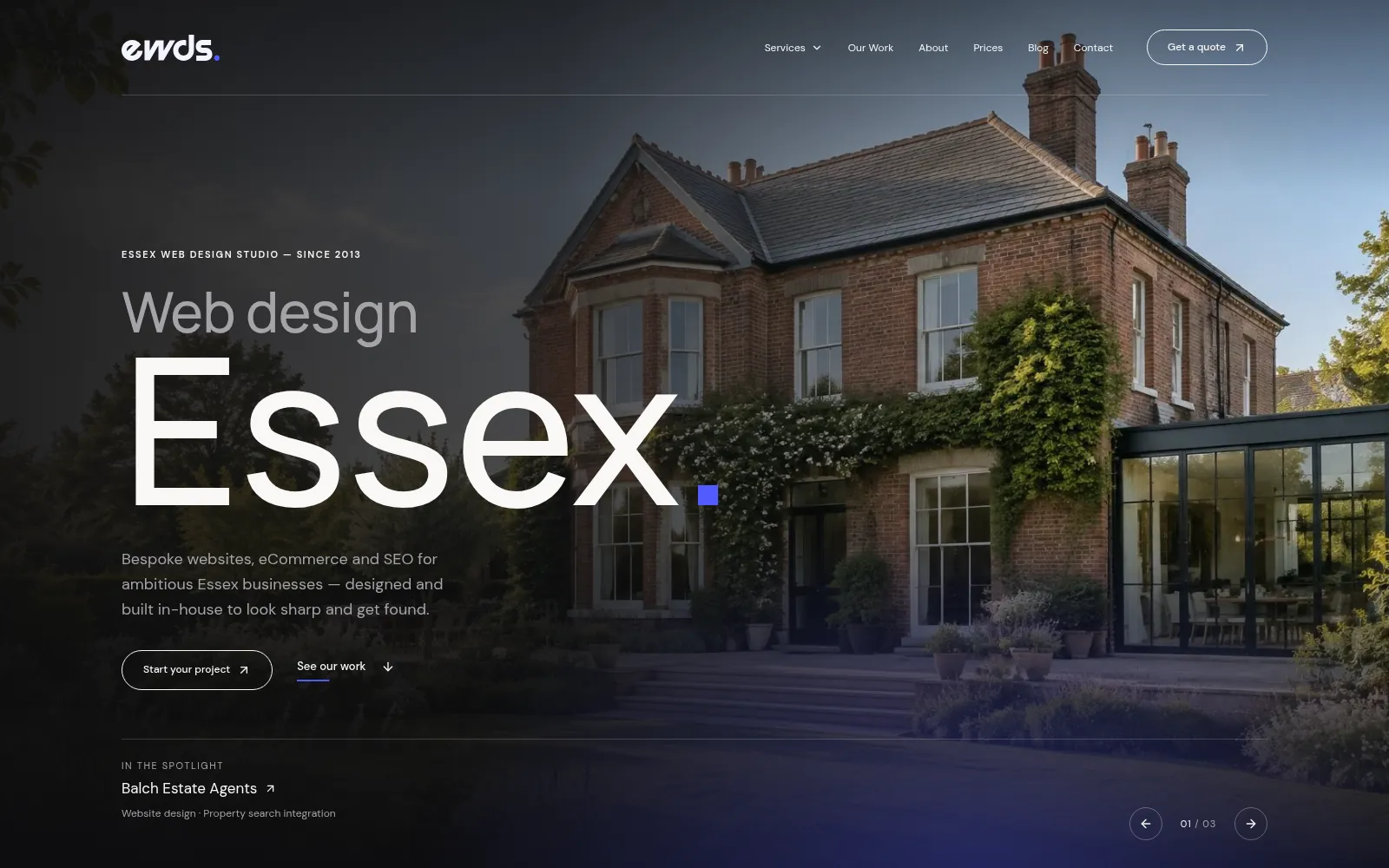
The homepage of this website, built in React and rendered on the server. Captured on 5 November 2026.
Performance
Quick because of the details.
Speed comes from decisions made all the way through a build, rather than from the name of the framework. These are the ones we build in.
Complete HTML from the server, so a page can be read before its scripts have loaded
Images saved in several sizes, so a phone downloads a copy that suits its screen
Code and styles split by page, so each page loads only what it uses
Caching rules set for each kind of file, so returning visitors reuse what they already have
Maintainability
Straightforward to change later.
A website keeps changing after launch. The way the code is organised decides whether those changes stay simple.
Written in TypeScript, which catches many mistakes before code reaches the website
One component for each pattern, so a change made once appears everywhere it is used
Automated checks that run before every release
Content kept separate from layout, so updating words never means rebuilding pages
SEO
Readable by search engines.
Server rendering is the foundation. The care each page gets on top of it is what makes the difference.
Its own title, description and canonical address on every page
Structured data that matches what the page actually shows
A sitemap generated from the pages that really exist
Real links between pages that crawlers can follow
None of this promises a search position or a speed score. It gives good content a fair chance to be found and a site that stays pleasant to use.
We build with both, and most of the websites in our portfolio run on WordPress. The right choice depends on the job the website has to do.
React suits
Bespoke, interactive features such as search, filters, shortlists and multi-step journeys
Content that already lives in another system and arrives through an API or feed
A set of reusable components that keeps a larger site consistent
App-like experiences, or a web app that sits alongside a mobile app
WordPress suits
Several people editing content every week
Publishing news and articles often
Online shops with WooCommerce and its wide choice of extensions
Handing the website to an in-house marketer or another team
What the framework won’t decide
Speed and search visibility. A React site can be slow and a WordPress site can be quick. Image sizes, caching, the scripts each page loads and the care taken over the build matter more than the name of the framework, and so does the content.
A bespoke React site has no theme marketplace or plugin directory. Features are built for you, so how content will be edited is planned before anything is built. If your team needs to edit pages every week, WordPress may well be the better choice, and we will say so.
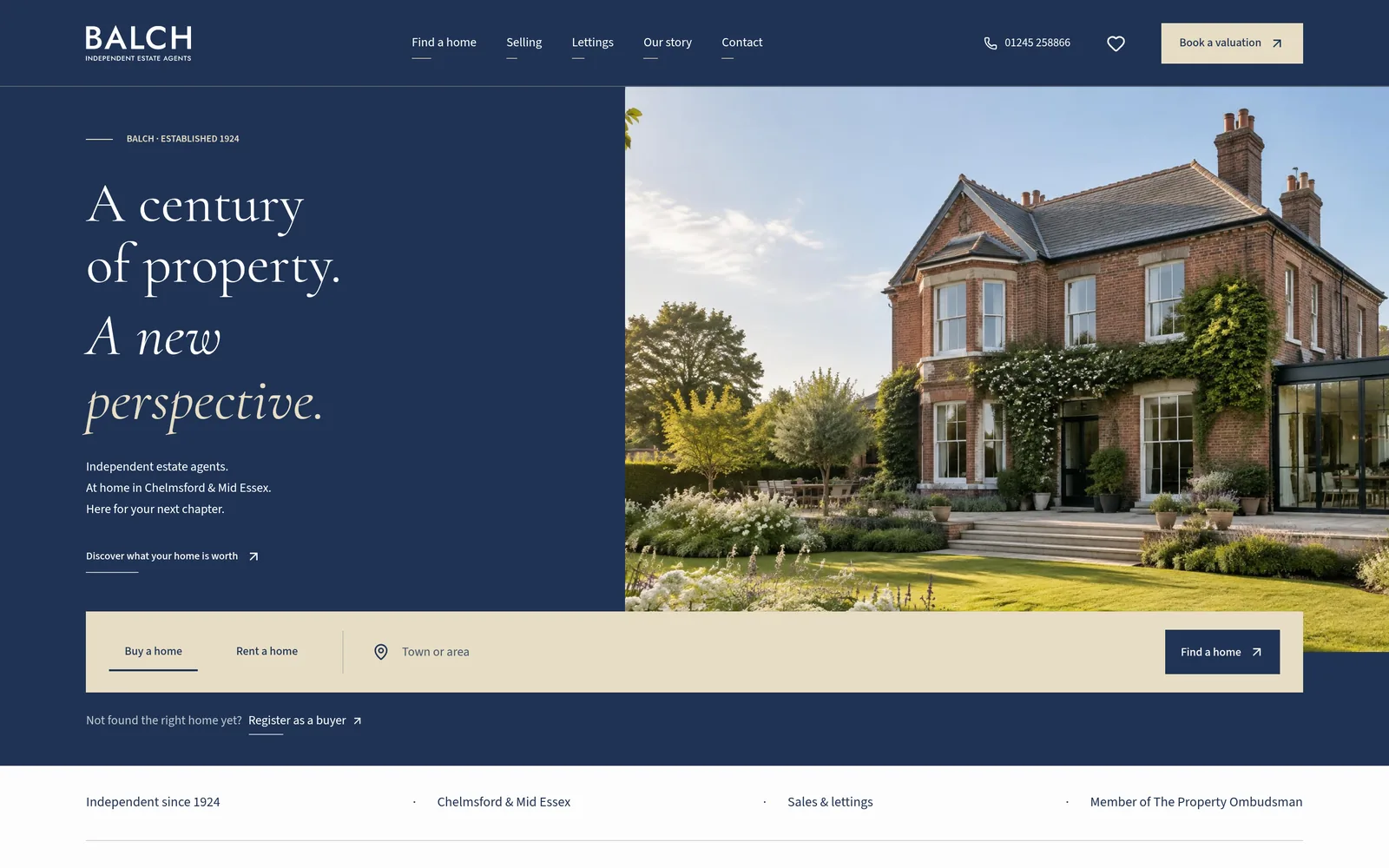
A new website for an independent estate agency in Chelmsford and Mid Essex, live since 4 November 2026. Visitors search homes for sale and to rent, save the ones they like on their own device and ask to arrange a viewing. Listings come from Balch’s own Dezrez account through a server-side connection.
We rebuilt our own website in React and launched it on 4 November 2026. Pages are rendered on the server, and React handles the menus, the project filters on our work page and the client carousel on the homepage.
We learn what the website or app needs to do, who will use it and which systems it must talk to, then recommend React only if it is the right fit.
02
Design
Journeys and screens designed around your brand and your users, with the reusable components planned from the start.
03
Build and connect
We develop the components, connect the data and test the key journeys on phones, tablets and desktops.
04
Launch and support
We launch carefully, check the pages search engines will read, and can look after hosting, search and ongoing changes afterwards.
Alongside the build
One studio, from design to search.
A React build is one part of a website that works. Design, hosting, search visibility and advertising all shape how it performs, and the studio can look after each of them.
React is an open-source JavaScript library for building user interfaces, originally created at Facebook (now Meta) and developed in the open by a large community. Interfaces are made from reusable components, which suits websites and web apps with bespoke, interactive features.
Is a React website good for SEO?
It can be, when it is built carefully. We render pages on the server, so search engines receive complete HTML with the words, headings and links already in place, and every page gets its own title, description and structured data. Visibility still depends on useful content, competition and ongoing work, so no search position can be promised.
Should we choose React or WordPress?
It depends on the job the website has to do. React suits bespoke, interactive features and content that comes from another system. WordPress suits teams who edit content often, publish regularly or run a WooCommerce shop. We build both, so we can recommend whichever fits your business and explain why.
Can we update a React website ourselves?
That depends on how the site is planned. Content can come from a system you already use, such as a property CRM, and editing tools can be planned in where your team needs them. If several people need to edit pages every week, WordPress may be the better fit, and we will tell you so before anything is built.
Will a React website be fast?
Speed depends on the build more than the framework. We render pages on the server, save images in several sizes, load only the code and styles each page needs and set caching rules for every kind of file, then test the key pages on phones, tablets and desktops before launch. No framework can promise a particular score.
Who looks after a React website after launch?
We can. Hosting, search and ongoing changes can all stay with the studio after launch. Because the site is built from shared components written in TypeScript, with automated checks before each release, changes stay predictable as it grows.
How much does a React website or web app cost?
Every React project is individually quoted, because the cost depends on the features, the integrations and the content involved. Our guide prices for websites and mobile apps are on our Prices page, and your quote sets out the scope and price clearly before you decide.
Can you build a mobile app with React?
Yes. Where it suits the brief, we can build apps for iOS and Android with web technologies such as React and Capacitor. Mobile apps start from £3,000 + VAT. Features, device capabilities and app store submission are scoped individually, and store approval is decided by Apple and Google.
Do you only work with businesses in Essex?
No. Our studio is at Moulsham Mill, Parkway, Chelmsford, Essex, and we work with businesses across Essex, London and beyond. Most of a React project can be planned and reviewed remotely, so where your business is based is rarely an obstacle.
Start a project
Have a React project in mind?
Tell us what your website or app needs to do and the systems it works with. We will tell you honestly whether React is the right fit and prepare a clear, individual quote.