

After more than a decade building websites with WordPress, we've started doing things differently. And no, it's not because WordPress suddenly became terrible.
For years, WordPress has been our bread and butter at Essex Web Design Studio. We've used it to build everything from straightforward brochure websites to complex e-commerce stores, and it's served us — and our clients — incredibly well.
But the web doesn't stand still. Neither do we.
Over the past year, we've been moving towards building more of our websites using React, a modern JavaScript technology used by some of the world's biggest digital platforms.
And the more we work with it, the more excited we get about what's possible.
So, is React better than WordPress? Should every business abandon its WordPress website immediately? And have we spent the last decade doing everything wrong?
Let's get into it.
First things first: What actually is React?
If you're not a developer, React probably sounds like another piece of technology you don't particularly need to understand.
And to be fair, you probably don't.
React is a JavaScript library originally developed at Facebook (now Meta) for building interactive user interfaces.
Unlike WordPress, which is a complete content management system (CMS), React gives developers the tools to create bespoke website interfaces without being restricted by a traditional theme.
Think of WordPress as buying a house and renovating it to suit your needs.
React is more like having an architect design the house around the way you actually want to live.
Both approaches can produce something beautiful. But one offers considerably more freedom from the outset.
And that's what first got us interested.
WordPress isn't broken. But the way many websites are built with it could be better.
Let's give WordPress some credit.
It powers an enormous proportion of the internet, has a fantastic ecosystem of plugins and makes managing website content relatively straightforward.
For many businesses, it's still an excellent choice.
But there's something we've noticed after years of working with WordPress.
It's incredibly easy to end up building a website around the limitations of a theme, rather than around the needs of the business.
You find a theme that looks close to what you want. Then you install a page builder to customise it. Then another plugin for some additional functionality. Then another to fix something the previous plugin doesn't quite do.
Before long, you've got 25 plugins, three different styling systems and a website that needs a small committee meeting every time you want to update something.
Sound familiar?
Of course, WordPress doesn't have to work like this. A well-developed custom WordPress website can be extremely fast, secure and flexible.
But the theme-and-plugin approach has become so commonplace that it's worth questioning whether it's always the best starting point.
For us, increasingly, the answer is no.
The freedom to design something genuinely different
One of the biggest reasons we've embraced React development is design freedom.
With a typical WordPress theme, you're often working within an existing design system. You can customise it, sometimes extensively, but there's usually an underlying structure influencing the result.
With React, we can build the interface around the design rather than making the design fit the interface.
Want a completely bespoke navigation experience? No problem.
Beautiful page transitions? Absolutely.
Interactive property searches, personalised dashboards, sophisticated filtering or unusual layouts that don't resemble every other website in your industry?
Now we're talking.
It's not that these things are impossible with WordPress. Far from it.
It's that React makes it possible to approach the entire project differently.
Instead of asking "Can the theme do this?", we can start asking "What would make this website brilliant?"
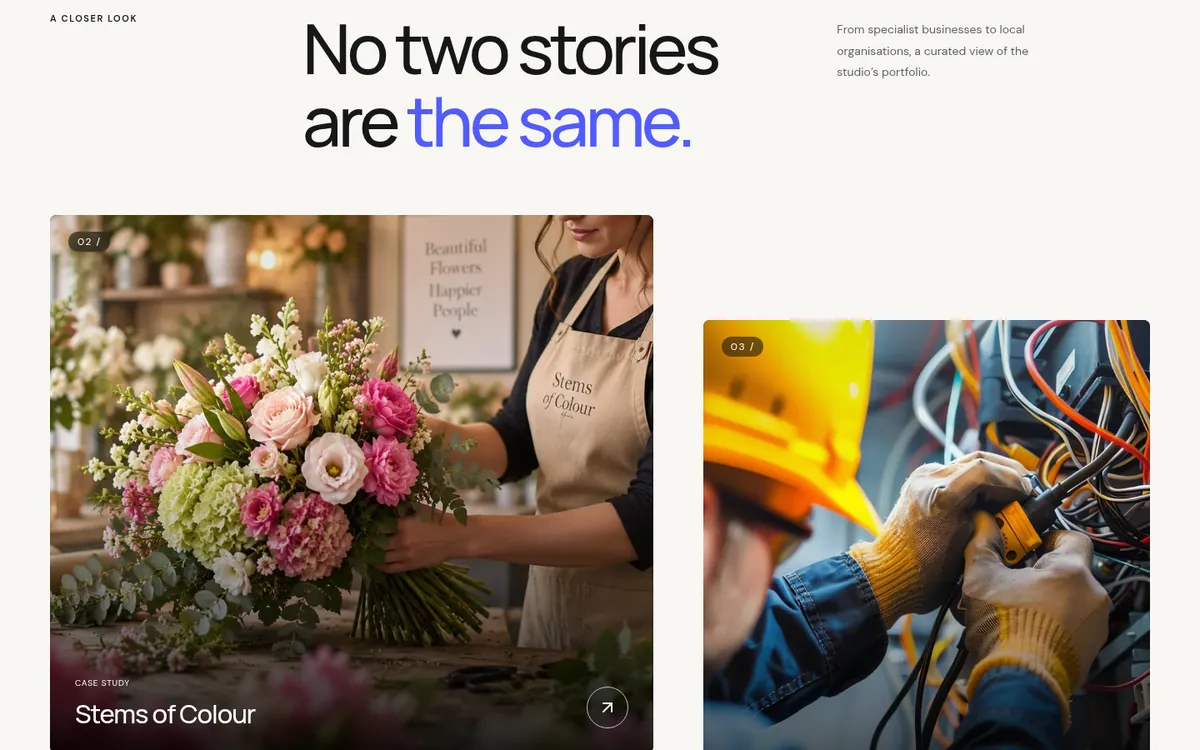
And that's a much more interesting conversation to have with a client. You can see what that looks like in our portfolio.
What about website speed?
This is where things get interesting.
React websites can feel incredibly responsive, particularly when moving between pages, interacting with content or using more sophisticated functionality.
That's because React can update individual parts of an interface without necessarily reloading the entire page.
However, there's an important distinction.
React doesn't automatically make a website faster than WordPress.
A poorly built React website can be slow. A well-optimised WordPress website can be exceptionally fast.
Performance depends on how the website is developed, hosted and optimised.
For example, a React website using modern frameworks and server-side rendering or static generation can deliver pages quickly while supporting rich interactive experiences.
And a lightweight WordPress website with good hosting, sensible caching and minimal unnecessary plugins can perform just as impressively.
The real advantage for us is having greater control over how the website is put together.
We can focus on delivering the experience visitors actually need, without automatically inheriting features, scripts or styling from a general-purpose theme.
Less unnecessary baggage. More intentional development.
That's the goal, anyway.
SEO: Can React websites rank as well as WordPress?
This is probably the most important question for businesses investing in a new website.
After all, there's not much point having a beautiful website if nobody can find it.
The good news is that Google doesn't award bonus points simply because a website uses WordPress or React.
Search engines care about things like relevant content, accessibility, crawlability, page experience and the overall usefulness of a website.
WordPress has traditionally been popular for SEO because it makes content management straightforward and offers mature optimisation tools.
React can be equally SEO-friendly, but it needs to be implemented properly.
For example, using frameworks such as Next.js can allow pages to be rendered on the server or generated ahead of time, making important content and metadata readily available to search engines.
A React website relying entirely on client-side rendering, on the other hand, can introduce unnecessary complications for crawling and indexing, as Google Search Central explains.
That's why the underlying development approach matters.
At EWDS, our focus remains exactly the same regardless of the technology:
- Clear, search-friendly website architecture
- Fast, responsive pages
- Proper headings, metadata and structured data
- Helpful, original content
- Strong internal linking
- An excellent experience across mobile and desktop
The technology should support your SEO strategy, not dictate it.
And with search evolving to include AI-powered experiences, creating accessible, well-structured content is becoming more important than ever.
The really exciting part? Websites that behave more like apps.
This is where React has genuinely changed the way we think about building websites.
Traditionally, a business website and a mobile app have often been treated as two completely separate projects.
But modern JavaScript technologies make it easier to share development approaches, business logic and backend services across websites and applications.
React itself is used for web interfaces, while React Native provides a related approach to building native mobile apps.
They're not identical technologies, and you can't simply press a button to turn any React website into an iPhone app.
But having a modern, API-driven architecture can make future development considerably more straightforward.
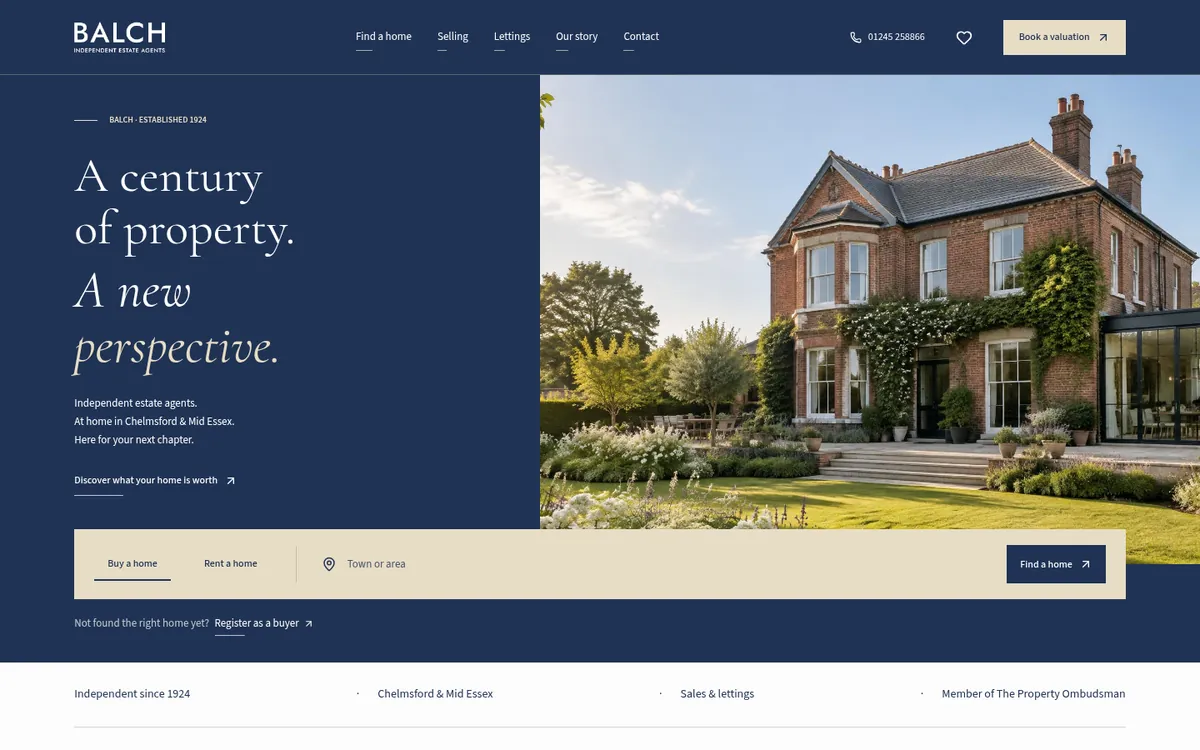
Imagine an estate agent with a website where customers can save properties, manage their preferences and arrange viewings.
Or a retailer with a personalised shopping experience, customer accounts and a companion mobile app.
Or a business giving its clients access to live reporting, project updates and support requests.
These experiences go well beyond a traditional collection of web pages.
And they're exactly the kinds of projects we're increasingly interested in building.
We're no longer thinking exclusively about websites. We're thinking about digital platforms that can grow with a business.
Does this mean we're saying goodbye to WordPress?
Not at all.
That would be a bit dramatic, wouldn't it?
We still manage WordPress websites, build WooCommerce functionality and recognise that WordPress remains a fantastic solution for plenty of businesses.
If a client needs a content-heavy website with an established editorial workflow, WordPress might be the most practical choice.
If a business already has a successful WooCommerce store, rebuilding everything in React simply because it's newer would be difficult to justify.
And if a straightforward brochure website can achieve everything a client needs without additional complexity, there's no reason to overengineer it.
But when we're starting a project from scratch, particularly one involving bespoke design, interactive functionality or future application development, React is increasingly our preferred approach.
Not because it's fashionable.
Because it gives us the freedom to build exactly what we have in mind.
React vs WordPress: Which is better for your business?
Here's the short version.
| What matters | WordPress | React |
|---|---|---|
| Editing | Built-in publishing tools | Pair with a CMS or custom admin |
| Design | Start with a theme or build a custom one | Build the interface around the brief |
| Good fit | Content sites and existing WooCommerce shops | Bespoke interfaces, portals and dashboards |
| Speed and SEO | Depends on the build, hosting and content | Depends on the build, rendering and content |
WordPress could be the better choice if:
- You need a familiar, established content management system.
- Your team frequently publishes and edits content.
- Your website relies on existing WordPress or WooCommerce functionality.
- You want to build on an existing WordPress investment.
React could be the better choice if:
- You want a distinctive, bespoke website experience.
- Your project involves advanced interactive functionality.
- You're considering a customer portal, dashboard or mobile app.
- You want an interface built specifically around your business processes.
- You're happy to use a suitable CMS or bespoke admin system for content management.
One important consideration: React isn't a replacement for every feature WordPress provides. Content management, authentication, hosting and other backend functionality still need to be planned and implemented.
The best technology is the one that makes sense for the project — not necessarily the one generating the most excitement among developers.
A new chapter for Essex Web Design Studio
When we started building websites over a decade ago, the tools available to smaller agencies were very different.
Creating highly customised digital experiences often required significantly more development time and larger budgets.
Today, modern frameworks, better development tools and AI-assisted workflows are changing what's achievable.
We're embracing those changes.
Not to replace creativity or expertise, but to spend more of our time on the things that actually matter: great design, useful functionality and delivering results for our clients.
And if that means we can create something that would previously have been out of reach for a small business, that's pretty exciting.
WordPress helped us build our agency.
React is helping us explore what comes next.
And we're only getting started.
Thinking about a new website?
Whether you're considering a complete redesign, a bespoke React website or something more ambitious involving a mobile app, we'd love to hear what you've got in mind.
At Essex Web Design Studio, we combine years of practical web development experience with modern technology to create websites that look fantastic and work hard for your business.
Because your next website should be more than just another website.